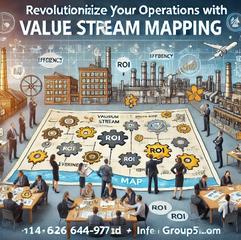
Value Stream Mapping (VSM) is a vital tool for organizations aiming to improve productivity, minimize waste, and streamline operations. This lean management methodology allows businesses to visualize and optimize the flow of materials and information necessary for delivering products or services to customers. VSM offers leadership teams comprehensive insights into process dynamics and resource utilization, enabling informed strategic decisions regarding resource allocation, technology investments, and process enhancements.

By creating a clear visualization of the current workflow, VSM helps identify bottlenecks and delays. Value stream mapping consultants can then reengineer these processes for greater efficiency and speed. According to Group50 Consulting, a successful VSM initiative should deliver immediate results by uncovering sources of waste (Muda), inefficient process flows (Mura), and misaligned capabilities (Muri). Furthermore, it can expose shadow systems that are both wasteful and prone to errors, providing valuable insights into the effectiveness of a company’s technological infrastructure.
Lean Manufacturing Assessments
Group50® employs various tools during its VSM projects, including Lean Business and Lean Manufacturing Assessments, integral to their Company Physical® framework. The process begins with the creation of a Value Stream Map in collaboration with process owners, engaging team members at all levels to co-develop a tangible map. Throughout this collaborative effort, consultants generate numerous recommendations aimed at reducing waste, eliminating shadow systems, addressing quality issues, and enhancing overall processes. They utilize Kaizen techniques alongside other essential Continuous Improvement Tools to implement these projects and equip organizational staff with the knowledge and tools necessary for ongoing success.
Enhancing Efficiency and Effectiveness
The synergy between Order to Cash (O2C) and Value Stream Mapping (VSM) can substantially elevate the efficiency and effectiveness of the O2C process. The O2C cycle is a critical business operation that covers all steps from receiving and fulfilling customer orders to collecting payment. It begins when a customer places an order and concludes when payment is recorded in the company’s financial systems. Effectively managing this cycle is crucial for maintaining healthy cash flow, ensuring customer satisfaction, and supporting operational efficiency.
Identifying Trends, Bottlenecks, and Opportunities for Improvement
The O2C process commences with capturing and processing customer orders, which involves verifying order details, checking product availability, and entering the order into the system. Once products or services are delivered, invoices are generated and sent to customers. Monitoring accounts receivable is essential for ensuring timely payments and addressing overdue accounts. Group50’s consultants specializing in Order to Cash Value Stream Mapping analyze the process to uncover trends, bottlenecks, and improvement opportunities.
Efficient order processing, prompt delivery, and proactive customer service are key factors that contribute to a positive customer experience, fostering loyalty and encouraging repeat business. By mapping each step of the O2C cycle, value stream mapping can highlight inefficiencies and guide organizations in developing targeted improvement strategies. Group50’s consultants offer valuable insights that inform strategic decision-making, enabling organizations to adapt to evolving market conditions and customer preferences effectively.

.jpg)

Comments
Post a Comment